


Editor’s Note: The Burrowing owl is part of the CROW CAW (Case A Week) series, which tells the stories of patients at the Clinic for the Rehabilitation of Wildlife on Sanibel Island, the dangers they face, and how we can help protect our wildlife. Read previous cases here.

An adult Burrowing Owl (Athene cunicularia) arrived at the Clinic for the Rehabilitation of Wildlife after becoming stuck to a glue trap. The powerful glue coated the owl’s wings, feet, and feathers, completely restricting the bird’s movement.
The first step was to remove the owl from the trap gently. CROW’s hospital staff sedated the bird to keep it comfortable and calm. These traps leave residual glue which must be painstakingly removed by hand in a multi-step process.
First, hospital staff use non-toxic adhesive removers like Ease-Off to remove the largest clumps. Then, staff bathe the patient in warm, soapy water. Once dried, the team coats the patient in a thin layer of chinchilla dust to dry up any lingering glue.
Over the following days, CROW’s veterinary and wildlife care teams continued to monitor and clean the owl’s feathers, gradually removing the remaining adhesive from its chest and wings. Although this patient was uninjured, glue traps can cause serious injuries. In the past, CROW has treated cases of broken bones and torn skin caused by these traps.


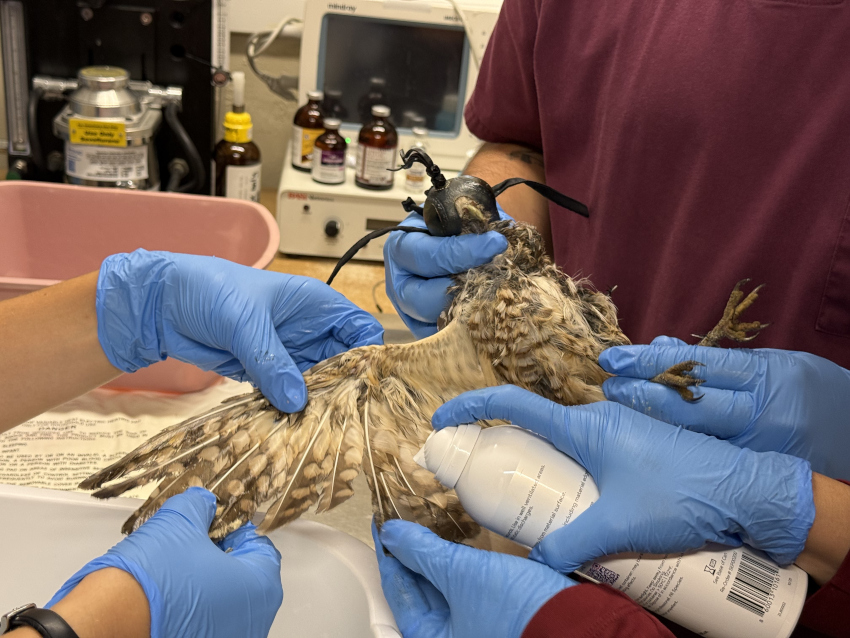
Before release, the owl was bright, alert, responsive, and evasive, demonstrating strong flight ability during final rehabilitation assessments. With restored feathers and good flight performance, patient 26-4313 was medically cleared for release back into the wild.
Burrowing owls are among Florida’s smallest native owls, living primarily in open habitats and spending much of their time near ground-level burrows. They average about nine inches in length and have a wingspan of up to 21 inches.
Unlike many owls, burrowing owls are active during daylight, particularly throughout their breeding season, making them especially noticeable in developed areas. Florida’s burrowing owl is a state-threatened species, meaning their burrows, eggs, and young receive legal protection.
Glue traps can unintentionally capture birds and other wildlife, causing severe feather damage, stress, injuries, and even death without timely intervention. Predators like owls and snakes are the main victims of glue traps, as they often hunt in areas with high rodent populations.
Leave a Comment